
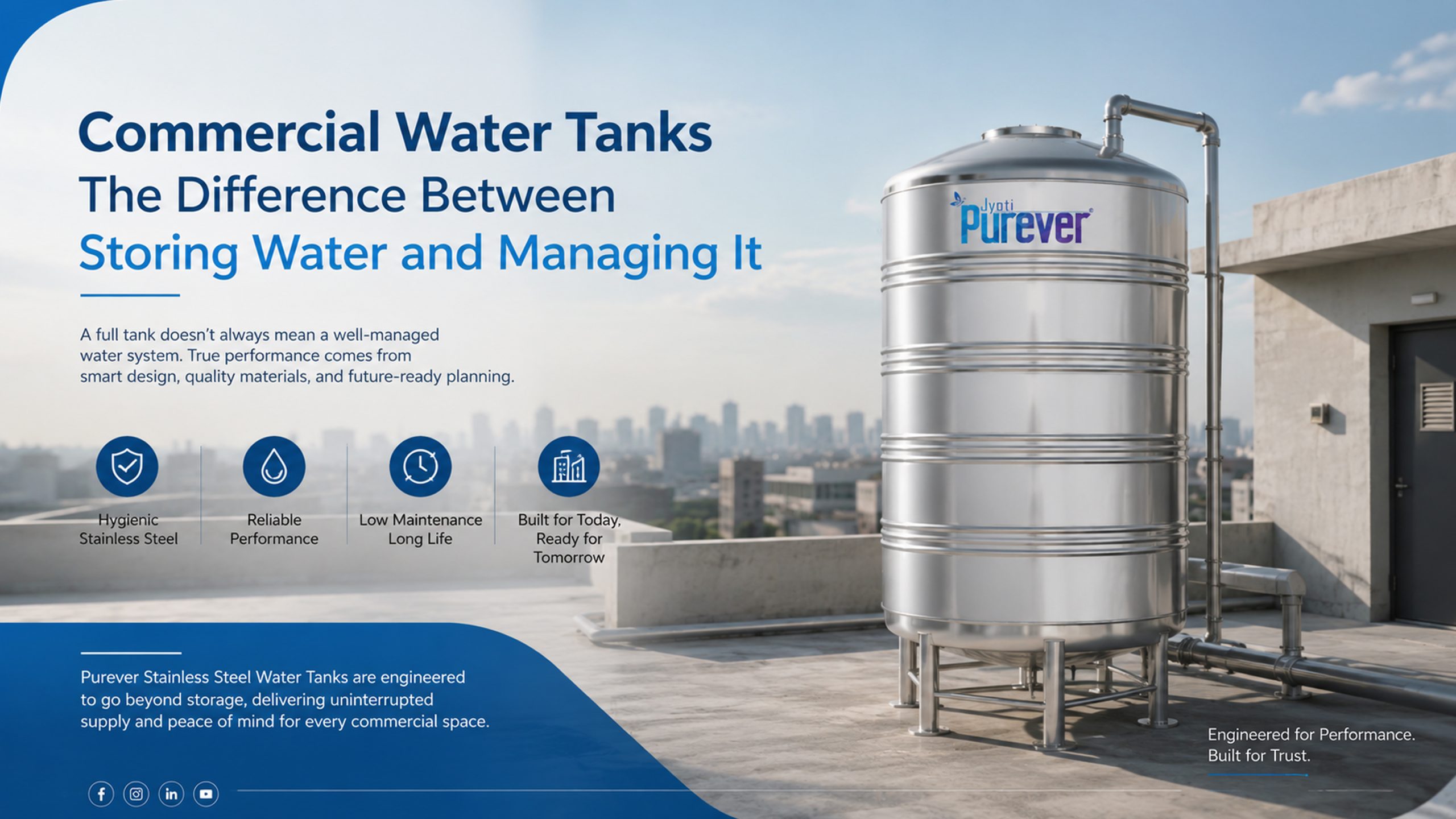
A Full Tank Doesn’t Always Mean a Well-Managed Water System
A facility manager once said something during a project review that stayed with me for a long time.
“We’ve never really had a water shortage problem. We’ve had a water timing problem.”
The building had enough storage capacity on paper. The tanks were full every morning, the pumps were working, and the supply looked sufficient during inspections.
Yet every afternoon, complaints started arriving from different parts of the building. Pressure fluctuations. Delayed refill cycles. Floors receive water at different times.
The issue wasn’t the amount of water available.
It was the way the water was being managed.
That’s when you realise there is a very real difference between installing commercial water tanks and designing a system that understands how a building actually behaves.
Buildings Rarely Use Water the Way Calculations Expect
Construction drawings are excellent at predicting averages.
Buildings are not.
A hotel may experience heavy demand during breakfast hours and again in the evening. An office building might consume most of its water during lunch breaks and shift changes. Hospitals and educational institutions create entirely different usage patterns altogether.
Water demand moves in waves rather than straight lines.
That’s why experienced consultants rarely choose commercial Stainless steel water tanks based only on daily consumption figures. They look at occupancy patterns, peak demand periods, and operational behaviour that may not appear in the original project report.
A building never reads its own calculations.
Storage Is Simple. Distribution Is Where Things Become Interesting
A surprisingly large number of commercial buildings have enough water but still struggle with supply issues.
I’ve seen facilities where the tanks were full while complaints about pressure continued arriving from upper floors. I’ve also seen buildings with modest storage capacity operate effortlessly because the planning behind the system was thoughtful.
The difference usually comes down to engineering details that nobody notices during installation.
The position of inlets and outlets. Pump sizing. Refill timing. Maintenance access. Distribution planning.
Well-designed commercial ss water tanks become part of the building’s rhythm rather than something the maintenance team constantly needs to monitor.
Most Problems Introduce Themselves Quietly
Water systems rarely fail dramatically.
Instead, they become slightly inconvenient.
An occasional complaint becomes a weekly complaint. Maintenance visits become more frequent. Overflow incidents happen often enough that people stop reporting them because they’ve started accepting them as normal.
That’s usually the stage where hidden costs begin appearing.
Time gets lost. Resources get diverted. Teams start solving the same issue repeatedly.
Good commercial water tanks are designed to prevent these patterns before they become operational habits.
The Building You Open Is Rarely the Building You Operate Five Years Later
Commercial projects have a tendency to grow.
An office leases another floor. A hotel expands its occupancy. A manufacturing unit adds another production line.
The water system has to grow alongside the business.
Designing only for today’s requirement often means redesigning tomorrow’s infrastructure. That’s one reason future-ready commercial Stainless steel water tanks are becoming increasingly common in commercial developments where expansion is expected rather than merely possible.
Growth should feel exciting.
Not stressful for the facilities team.
Material Matters More Than People Think
Commercial infrastructure doesn’t get weekends off.
Water storage systems operate every day, through changing temperatures, varying demand and continuous refill cycles.
Reliability becomes incredibly valuable when hundreds or thousands of people depend on the same system.
That’s why many project consultants continue recommending commercial ss water tanks manufactured from stainless steel. They offer durability, hygienic storage and the kind of long-term consistency commercial projects quietly depend on.
Good infrastructure often earns appreciation by avoiding attention altogether.
Why Manufacturers Need to Understand Buildings, Not Just Dimensions
Two commercial projects may ask for exactly the same capacity and require completely different solutions.
The available space changes.
The occupancy changes.
The future plans certainly change.
At Purever, discussions around commercial water tanks begin with understanding how the building will operate rather than immediately recommending a standard product. Expected demand, installation limitations and future growth all become part of the conversation before manufacturing begins.
That process creates commercial Stainless steel water tanks that feel designed for the project rather than simply installed in it.
Water Storage Is Easy. Water Management Takes Planning
Almost any tank can hold water.
Keeping a commercial building running smoothly for the next fifteen or twenty years requires something more thoughtful than that.
Reliable commercial ss water tanks, intelligently designed commercial water tanks, and carefully engineered commercial Stainless steel water tanks help businesses move beyond storage and towards true water management.
And perhaps the best sign that a system has been planned properly is this:
Nobody in the building ever has a reason to think about it.