
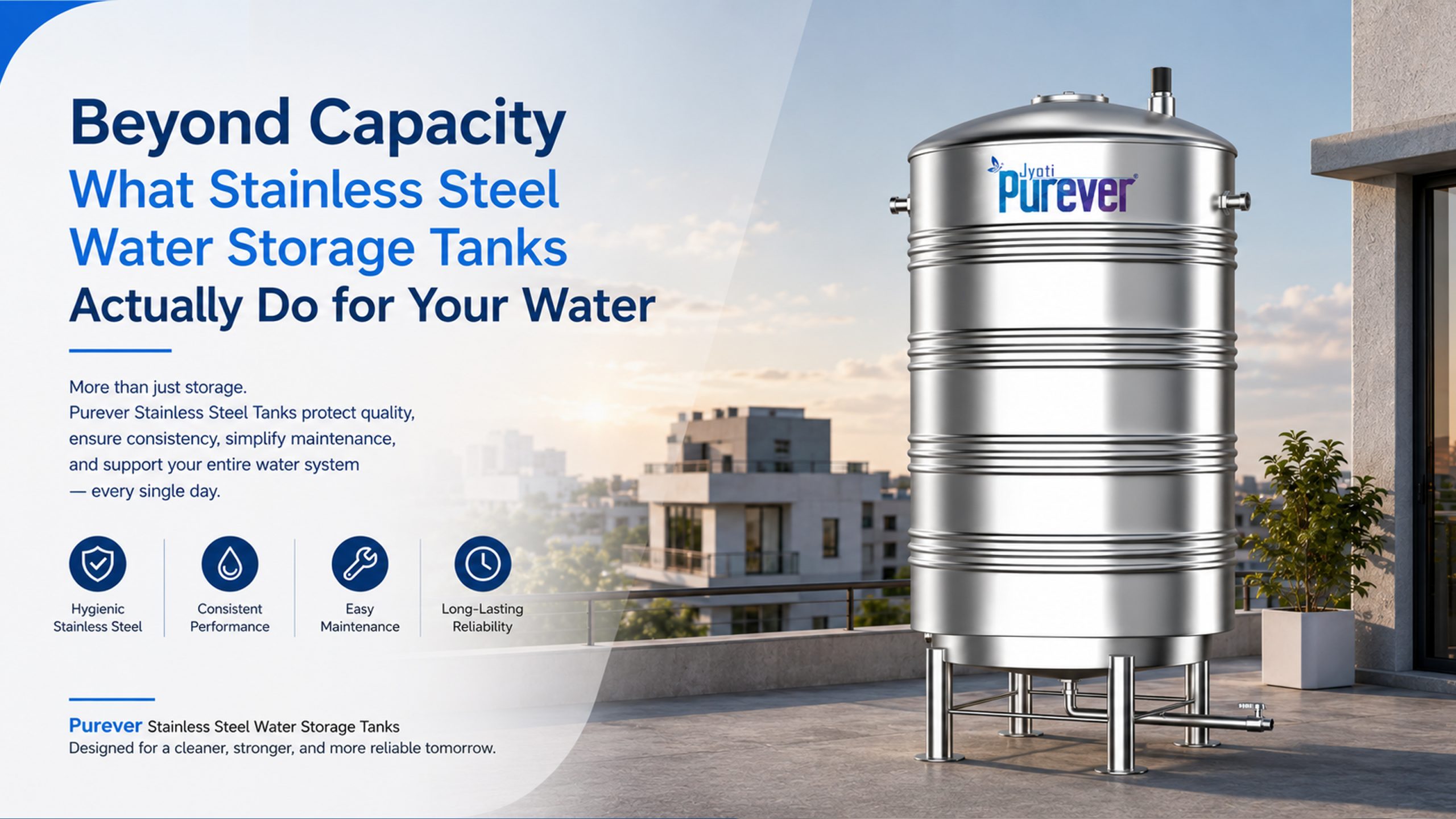
A Water Tank Usually Enters the Conversation as a Number
Five thousand litres.
Ten thousand litres.
Twenty thousand litres.
Somewhere during planning meetings, water storage often becomes a discussion about capacity and dimensions. Once the required litres are calculated, the tank is treated as a box that simply holds water until someone opens a tap.
After spending time with contractors, architects and facility managers, I’ve realised that the better projects think about water storage very differently.
Because a tank doesn’t just store water.
It influences how that water behaves, how long it stays usable, how easy it is to maintain, and how confidently people rely on it years after installation.
That’s a much bigger responsibility than simply holding a certain number of litres.
Water Is Stored Longer Than Most People Realise
A plumbing consultant once explained something surprisingly simple.
“The purifier sees the water for a few seconds. The tank sees it for hours.”
That changes the way you look at storage.
Before water reaches a kitchen tap, a bathroom, or an industrial process, it spends time inside the storage system. Sometimes a few hours. Sometimes much longer depending on usage patterns and occupancy levels.
The environment in which that water sits matters.
That’s one reason many project consultants increasingly recommend Stainless Steel water storage tanks for residential and commercial projects where long-term water quality is taken seriously.
The storage stage is part of the water journey, not merely a pause in it.
Consistency Matters Just as Much as Capacity
I’ve visited buildings where the storage calculations were technically correct, yet the experience of using water felt strangely inconsistent.
Morning pressure differed from evening pressure.
Upper floors behaved differently from lower ones.
Maintenance teams spent more time adjusting the system than anyone expected.
The issue wasn’t always insufficient storage.
Sometimes it was the difference between storing water and managing it effectively.
Well-designed Stainless Steel water tanks contribute to a more stable system by supporting predictable distribution, reliable operation and easier maintenance access over time.
Those benefits don’t appear on specification sheets very often, but building managers notice them quickly.
Materials Quietly Influence Performance
Most people don’t spend much time thinking about the material surrounding their stored water.
Until they have a reason to.
Construction professionals tend to think differently because they’ve seen how materials behave after years of exposure to changing temperatures, daily filling cycles and continuous use.
That’s one reason ss water storage tanks have become increasingly common across homes, institutions and commercial projects. Durability matters, certainly, but so does the ability to maintain a clean and dependable storage environment throughout the life of the system.
Infrastructure is rarely judged on installation day.
It earns its reputation over time.
Maintenance Should Feel Routine, Not Difficult
A site engineer once told me that the easiest systems to maintain are usually the ones people remember least.
He wasn’t being dismissive.
He meant that good engineering quietly removes friction from everyday operations.
Easy access for inspection, sensible layouts for cleaning and dependable materials all contribute to a storage system that supports the building without demanding constant attention.
That’s exactly what thoughtfully designed Stainless Steel water storage tanks aim to achieve.
The goal isn’t to eliminate maintenance.
The goal is to make maintenance feel ordinary instead of disruptive.
A Water Tank Supports More Than Water
When people think about water storage, they usually think about supply interruptions.
Fair enough.
But the storage system influences much more than availability.
It affects operational confidence in commercial buildings, everyday convenience in homes, and maintenance efficiency for the people responsible for keeping the system running.
Reliable Stainless Steel water tanks become part of the invisible infrastructure that allows everything else in the building to function normally.
Most occupants never notice that contribution.
That’s probably a good sign.
Why Purever Looks Beyond Capacity Figures
At Purever, discussions around water storage begin with understanding the building itself rather than simply recommending a capacity number.
Available space, occupancy patterns, maintenance access and future requirements all shape the final design.
That approach allows ss water storage tanks to become part of a larger water management strategy rather than isolated pieces of equipment sitting on a rooftop.
Because water storage is rarely just about storage.
The Best Water Systems Usually Go Unnoticed
People notice leaking taps.
They notice pressure problems.
They notice maintenance disruptions.
They almost never notice a well-designed water tank.
That’s because dependable Stainless Steel water storage tanks, reliable Stainless Steel water tanks, and thoughtfully engineered ss water storage tanks spend their lives doing exactly what they’re supposed to do, quietly supporting the water system without asking anyone to think about them at all.
For infrastructure, that’s about as close to perfection as it gets.