
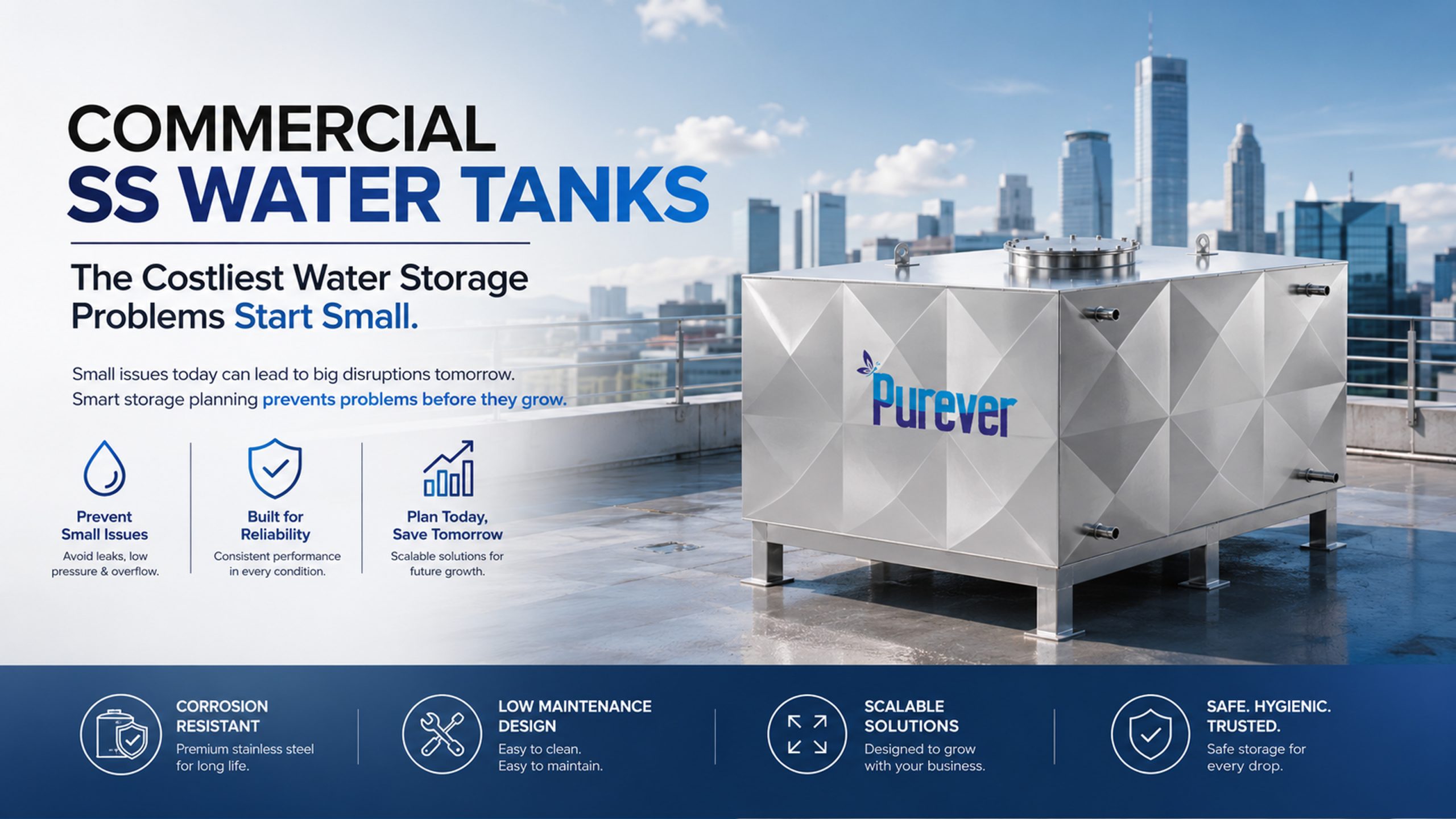
Nobody Notices a Water Problem When It Starts
A maintenance supervisor at a commercial complex once told me that the first complaint was almost laughably small.
One washroom on the top floor had slightly lower pressure than usual.
A few weeks later, another floor reported delayed refilling during peak hours. Then came occasional overflow during the night. Eventually, the facility team was spending more time discussing water than they were discussing the building itself.
The surprising part?
Nothing had actually failed.
The storage system had simply outgrown the assumptions it was built on.
That’s often how commercial water issues begin. Quietly. Gradually. Almost politely.
And that’s exactly why the planning behind Commercial ss water tanks matters far more than most projects initially realise.
Small Inefficiencies Have a Way of Multiplying
Commercial buildings operate differently from residential ones.
An office tower experiences sharp spikes in usage during breaks. Hotels can see demand rise dramatically within a couple of hours. Hospitals and educational institutions create their own unique consumption patterns that don’t always follow traditional calculations.
A storage system that performs perfectly at 60 percent occupancy may begin struggling at 85 percent occupancy without ever technically running out of water.
That’s the difference between storing water and managing demand.
Well-designed commercial water tanks are engineered around how people actually use buildings rather than how spreadsheets assume they will.
The distinction sounds small.
Operationally, it isn’t.
The Most Expensive Problems Rarely Look Expensive at First
An overflow valve that occasionally leaks.
A refill cycle that’s slightly slower than expected.
A maintenance hatch that’s awkward to access.
Individually, these issues seem manageable. Together, they create a pattern of small interruptions that quietly consume time, labour, and resources.
I’ve spoken with facility managers who described spending years adapting to problems they assumed were normal.
Extra maintenance visits became routine.
Temporary solutions became permanent solutions.
People adjusted their schedules around the limitations of the system rather than fixing the cause.
Good commercial stainless steel water tanks are designed to avoid exactly this kind of slow operational drift.
Commercial Buildings Rarely Stay the Same
One of the easiest mistakes during project planning is assuming that opening day and year ten will look similar.
They usually don’t.
Businesses expand. New tenants move in. Production increases. Restaurants add seating capacity. Hotels improve occupancy rates.
Growth is good news for the business.
Sometimes it’s difficult news for the infrastructure.
That’s one reason engineers increasingly recommend scalable Commercial ss water tanks that leave room for future demand rather than simply satisfying today’s requirements.
Retrofitting storage systems after occupancy is possible.
It’s also expensive, disruptive, and almost always more complicated than expected.
Reliability Becomes More Valuable as Occupancy Increases
A family home can often tolerate a temporary water issue.
A hospital cannot.
Neither can a hotel, manufacturing facility, shopping complex, or office building with hundreds of employees.
Commercial infrastructure operates under different expectations. Systems need to perform consistently through changing weather conditions, fluctuating occupancy levels, and continuous usage cycles.
That’s why commercial stainless steel water tanks continue to be a preferred choice across commercial developments where durability and reliability are not optional features but operational necessities.
Good infrastructure doesn’t ask for attention.
It quietly prevents disruption.
Why Storage Decisions Should Involve More Than Capacity
During procurement discussions, capacity often dominates the conversation.
Ten thousand litres.
Twenty thousand litres.
Thirty thousand litres.
The more experienced consultants usually ask different questions.
How accessible will maintenance be?
What happens if occupancy doubles?
Can the system be expanded without redesigning the plumbing network?
How will the building operate during peak demand periods?
The answers to those questions often determine how successful commercial water tanks will be over the next twenty years rather than the next twenty weeks.
Why Purever Looks Beyond the Specification Sheet
At Purever, projects rarely begin with standard dimensions alone.
The conversation usually starts with occupancy patterns, available space, maintenance requirements, and future expansion plans. That approach allows Commercial ss water tanks to become part of the building’s operational strategy rather than simply another item on the procurement list.
By designing commercial stainless steel water tanks around actual site conditions, the focus shifts from solving today’s requirements to preventing tomorrow’s problems.
And in commercial infrastructure, prevention is almost always cheaper than correction.
The Best Water Storage System Is Usually the One Nobody Talks About
No facility manager wants water storage to become a weekly discussion topic.
No business owner wants operational planning to revolve around refill cycles and maintenance schedules.
Reliable commercial water tanks, durable Commercial ss water tanks, and thoughtfully engineered commercial stainless steel water tanks exist for a very simple reason: so businesses can focus on running the business instead of managing the water system supporting it.
Because the costliest water storage problems rarely arrive all at once.
They start small.
Then they stay.